
A Cuppa With Georgia Hartman

Hi Georgia, can you tell us a little about yourself and your background in naturopathy?
Thank you for having me here! My name is Georgia - I was born and bred in Coffs Harbour and now live with my fiancé and three kids (Otto who is five, Rumi who just turned four, and Lottie who is one) in Newcastle. Once Steven and I finished our studies, we moved here from Sydney and absolutely love it. We’re close enough to the city but far enough away to feel the space. At the moment, my life looks very busy. Aside from being a mum, I am a naturopath, honorary adjunct lecturer, and founder of Hormone Health Studio. And, at the time of sitting down in this series, I am also writing my first book!
What drew you to specialise in women's hormonal health?
Honestly, growing up I had no idea what a naturopath was. It wasn’t until I was at uni in Sydney studying something completely different that my sister said to me: “you need to become a naturopath.” I saw how much it helped her with severe Endometriosis. I went to the open day. And the rest is history.
My love for hormonal health only deepened after my own diagnosis with Premature Ovarian Insufficiency (POI) in my 20s. After being told my only chance of conceiving would be through donor egg, and yet going on to conceive all three of my babies naturally, I am incredibly passionate and dedicated to helping women better understand their bodies.
Hormonal imbalance gets thrown around a lot as a catch-all term. From your clinical perspective, what does it actually mean, and what are the most common hormonal patterns you see walking through your door?
Hormonal imbalance gets thrown around a lot. Reason being is that hormones influence everything. Struggling with fatigue? Hormones are involved. Weight gain? Hormones. PMS? Hormones. Poor sleep? Hormones. Fertility? Hormones. Perimenopause? Hormones.
But from a clinical perspective, a hormonal imbalance isn't simply "your hormones are out of whack." It's a sign that somewhere in the conversation between the brain, the ovaries, the thyroid, the adrenal glands, the gut, the immune system and the rest of the body, communication has broken down. The hormones are often the messenger, not the problem itself.
The women who come to see me are usually trying to solve one symptom. They're trying to get pregnant. They're struggling with debilitating PMS. They can't lose weight despite doing everything "right." They're exhausted, anxious, angry, breaking out, waking at 3am, or feeling like they've become someone they don't recognise.
Most arrive convinced they have a hormone problem. What I often find is a whole-body problem expressing itself through hormones. Their stress response is dysregulated. They're running on caffeine and adrenaline. Their ferritin is on the floor. Their blood sugar is unstable. Their gut isn't absorbing nutrients. They're sleeping poorly. Their thyroid isn't functioning optimally. Their nutrient reserves have been depleted for years. Their environment is filled with endocrine-disrupting chemicals.
And every one of those things influences hormone production, metabolism and signalling.
The most common hormonal patterns I see are low progesterone, irregular or absent ovulation and cycles, insulin resistance, thyroid dysfunction, and the hormonal disruptions that come with chronic stress and under-fuelling. But what's interesting is that these patterns rarely exist in isolation. They're usually downstream from something else.
That's why I spend far less time asking "What's wrong with your hormones?" and far more time asking "Why are your hormones responding this way in the first place?" Because when you address the root cause, hormones often start behaving exactly as they were designed to.
Hormonal health doesn't exist in isolation - it intersects with sleep, stress, nutrition, gut health. When you're working with a complex hormonal presentation, how do you figure out where to start?
I always start with the story.
Before I look at a single blood test, I want to know what life actually looks like. How are you sleeping? Eating? Moving? How stressed are you? What's happening at work, at home, in your environment? What has your cycle been doing? How long has this been brewing? Because symptoms rarely start where the problem starts.
Then we look at the testing. Not just oestrogen and progesterone, but the bigger picture - a full thyroid panel, cortisol, vitamin B12, D, genetics, the gut (and in some cases vaginal) microbiome + more. So many women have been told their blood tests are "normal" when nobody looked beyond TSH and a basic iron study.
And usually, the next step becomes pretty obvious. If you're exhausted, living off coffee, ferritin on the floor, not sleeping, and your stress response is all over the place, that's where we start. There's no point trying to optimise hormones when the foundations are crumbling underneath them.
The body is incredibly logical. My job is to figure out what it's trying to tell us.
Cycle tracking has had a big moment in the wellness space - apps, wearables, seed cycling, cycle syncing your workouts. What's your take on it all, and what do you actually recommend to clients?
I love that cycle awareness is having its moment. Truly.
For decades, women were taught to ignore their cycle and essentially turn it off unless they were trying to get pregnant. Now we're finally talking about the importance of ovulation and cycle regularity not only for fertility but for energy, mood, anxiety, brain health, bones and joints, skin, and longevity. That's a huge step forward.
What I do actually recommend is tracking. Not because an app will fix your hormones, but because your cycle is one of the most valuable pieces of health data you have.
I want (pre-menopausal) women to know: How long is your cycle? Are you ovulating? What's your cervical mucus like? How heavy is your bleed? How painful are your periods? When does your energy dip? When do symptoms show up? Those patterns tell us a lot.
In clinic, some of my biggest breakthroughs have come from information women track for three months. The goal isn't to become obsessive. The goal is to become fluent in your own body. An app can help you collect the data. But the real skill is learning how to interpret what your body has been trying to tell you all along.
You've walked the path personally as well as professionally, how has your own experience shaped the way you work with clients navigating difficult hormonal diagnoses?
My own journey has shaped the way I practice completely. Like many of the women and couples I now work with, I spent a lot of time searching for answers. I know what it feels like to sit in appointments and leave with more questions than answers. To be told everything looks "normal" when you know something isn't right. Or to be told “this is your only option” without being asked a single question.
When someone receives a diagnosis like endometriosis, PMOS (formerly known as PCOS), POI, or infertility, just as a few examples, they’re not just navigating symptoms. They’re navigating grief, uncertainty, fear, frustration and often a loss of trust and control in their own body.
I never forget that.
The clinical side matters enormously. The testing, the treatment plans, the research. But I think what my own experience gave me was empathy for the emotional weight that comes with these diagnoses. I understand that when someone asks, "Will I ever get pregnant?" or "Will I ever feel like myself again?", they're not really asking for statistics. They're asking for hope.
So I try to be the practitioner I wish I'd had. Someone who listens carefully, explains things clearly, looks beyond the obvious, and never reduces a person to a diagnosis or a lab result.
Because behind every hormone panel, ultrasound report, or pathology result, is a human being trying to get their life back.
And that's the person I'm treating.
When a woman receives a diagnosis that feels like a door closing on her fertility, the medical advice can sometimes feel very final. What does the naturopathic lens bring to that conversation, and where do you see the most room for support?
One of the hardest parts of fertility care is that many women hear a diagnosis and assume it is a prognosis.
They're told they have PMOS, endometriosis, POI, low AMH, recurrent miscarriage, infertility, or that they're "too old" and understandably, it can feel like a door has just slammed shut.
What I try to help people understand is that a diagnosis tells us something about where you are today. It doesn't tell us everything about what happens next. And that’s where the naturopathic lens asks a different question. Instead of focusing solely on the diagnosis, we focus on the factors that influence fertility and reproductive outcomes.
We look at ovulation, egg quality, sperm quality, thyroid function, nutrient status, metabolic health, sleep, inflammation, stress, gut health, sexual health, mitochondrial function, and overall wellbeing. These are not separate from fertility - they are fertility.
My role is to identify what may be limiting optimal reproductive function and create the healthiest possible environment for conception, implantation and pregnancy to occur. I may not be able to change the diagnosis itself, but there is often far more that can be done to support the person behind the diagnosis than many people realise.
I think where naturopathic medicine offers the most value is in helping women and couples move from simply hoping for a pregnancy to actively preparing for one.
What's something the mainstream conversation around women's hormones consistently gets wrong, or just doesn't talk about enough?
I think the biggest thing the mainstream conversation gets wrong is that it treats hormones as if they exist in isolation. We talk about oestrogen, progesterone, cortisol, testosterone (and the like) as though they're independent problems to be fixed. But hormones don't operate like that. They're responding to everything happening in the body.
The conversation is often "What supplement should I take for my hormones?" when the more important question is "Why are my hormones responding this way in the first place?"
Because hormones are influenced by everything. Sleep. Nutrition. Stress. Blood sugar. Thyroid function. Gut health. Inflammation. Nutrient insufficiencies. Environmental exposures. The health of your mitochondria. How much energy your body has available. Whether you're ovulating.
Every system in the body is constantly talking to every other system, and hormones sit right in the middle of that conversation. And yet, hormonal health is often reduced to a social media infographic.
The other thing we don't talk about enough is ovulation. Most women know when they get a period. Far fewer know whether they're actually ovulating each cycle.
But ovulation is arguably the most important event in reproductive-aged women. It's not just about fertility. Ovulation drives progesterone production, protects against too much oestrogen, influences mood, energy, supports bone health, impacts metabolism and contributes to long-term hormonal wellbeing. In clinic, I'm often less interested in a woman's period than I am in the events that happened in the lead up to it.
If I could change one thing about the conversation around women's hormones, it would be this: stop asking whether your hormones are balanced and start asking whether your body has what it needs to produce and regulate those hormones well in the first place.
What Mayde Tea product have you been loving lately?
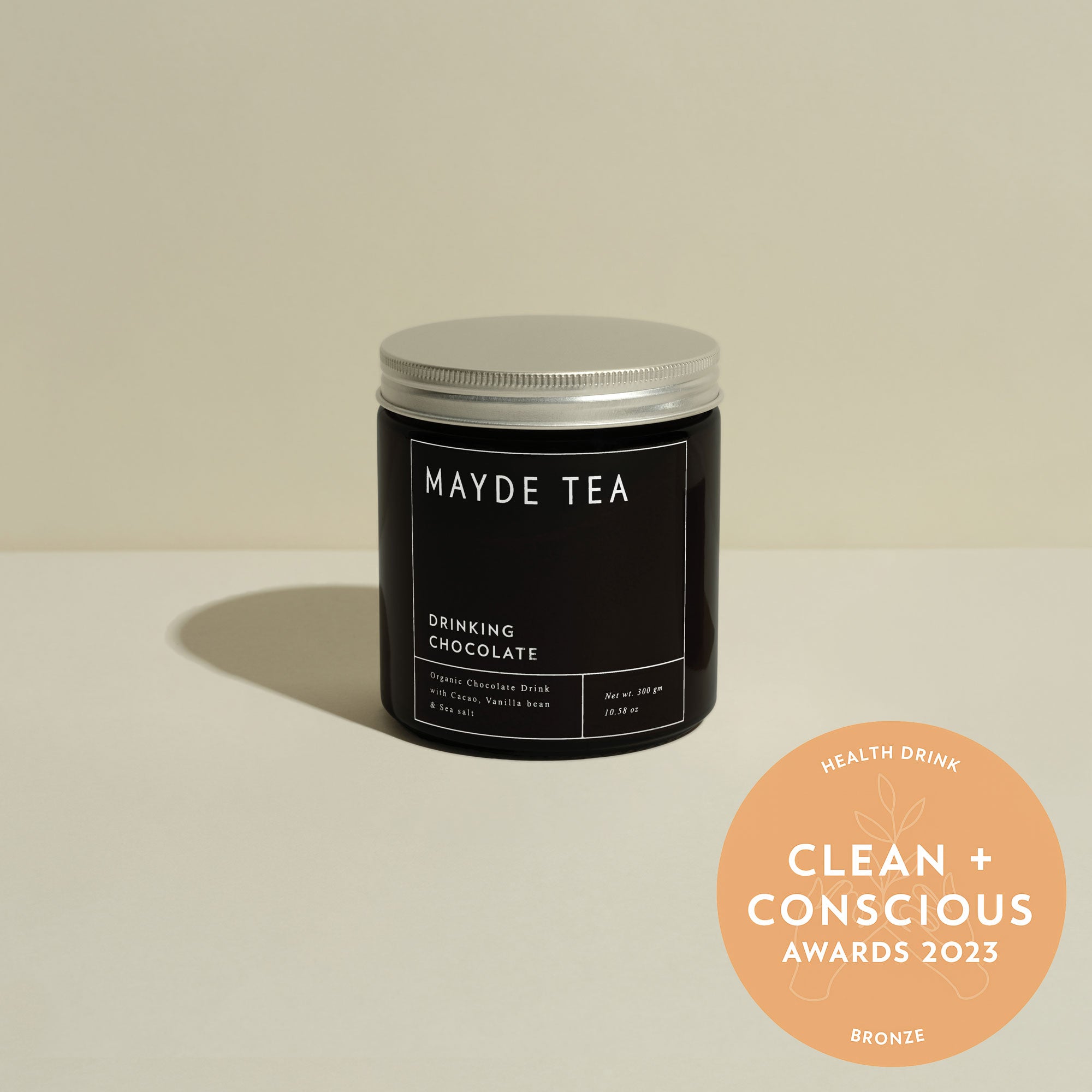
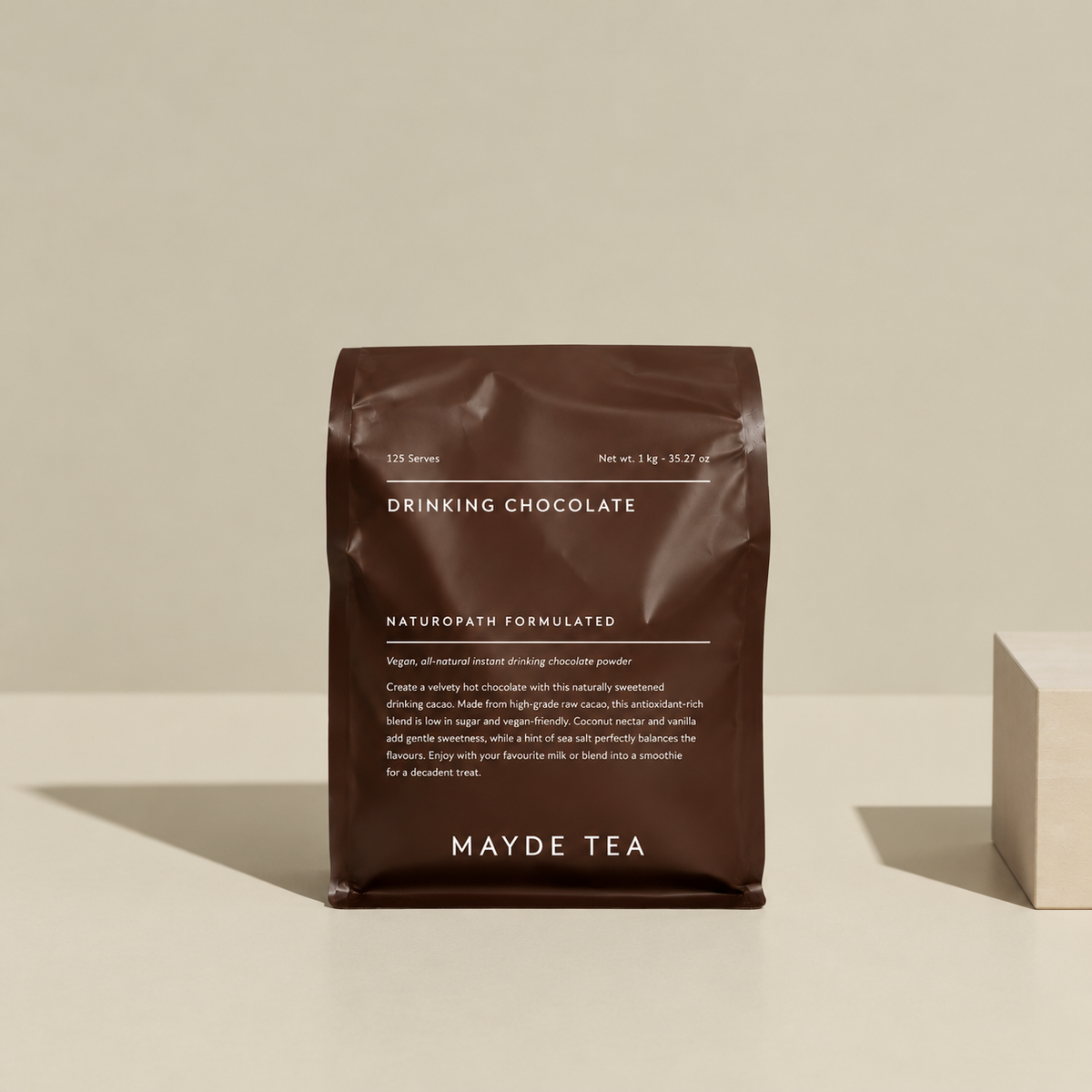
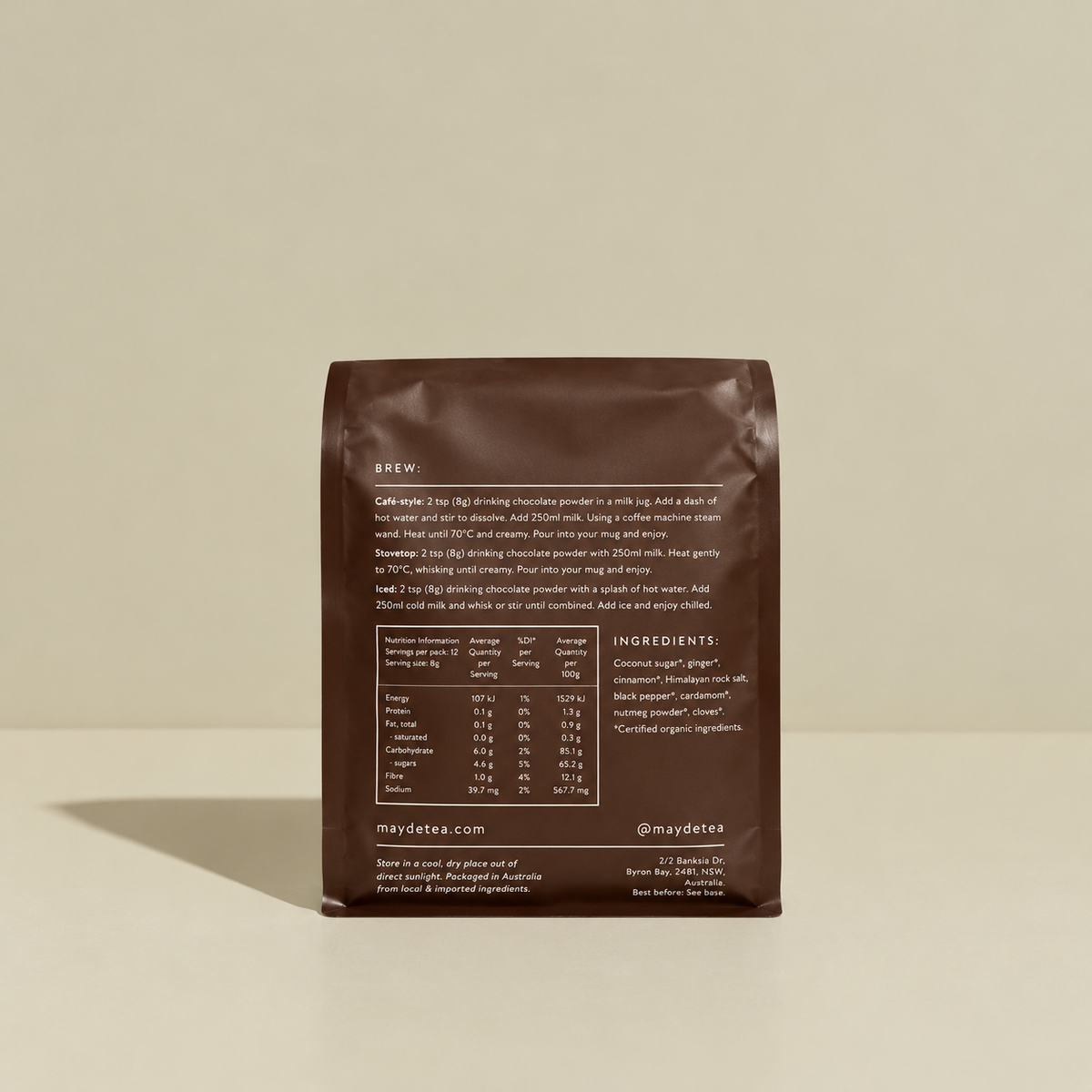
Drinking Chocolate in hot almond milk topped with Chocolate Dust. Every night once I put the kids to sleep. The perfect addition in cooler months.
What are you currently...
Listening to: Back to Friends by Sombr
Reading: The book I’m currently writing!!
Watching: I’m recovering from Off Campus… I need another series
Eating: Steak + cucumber + burger sauce wraps

Leave a comment
This site is protected by hCaptcha and the hCaptcha Privacy Policy and Terms of Service apply.